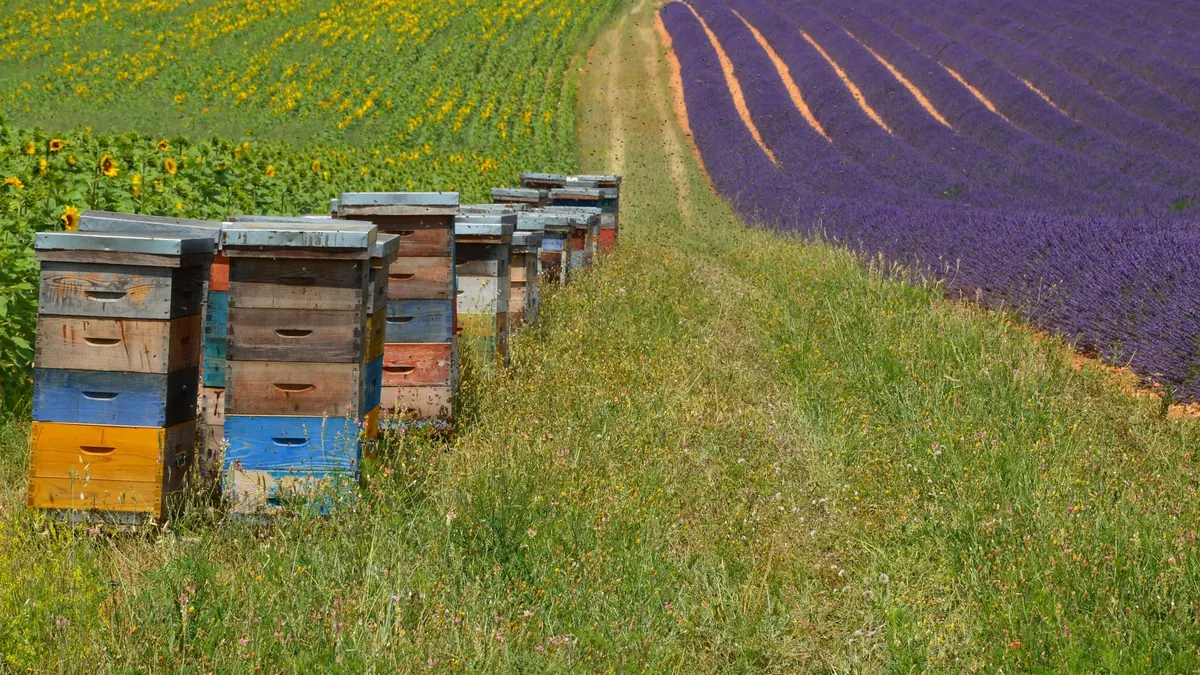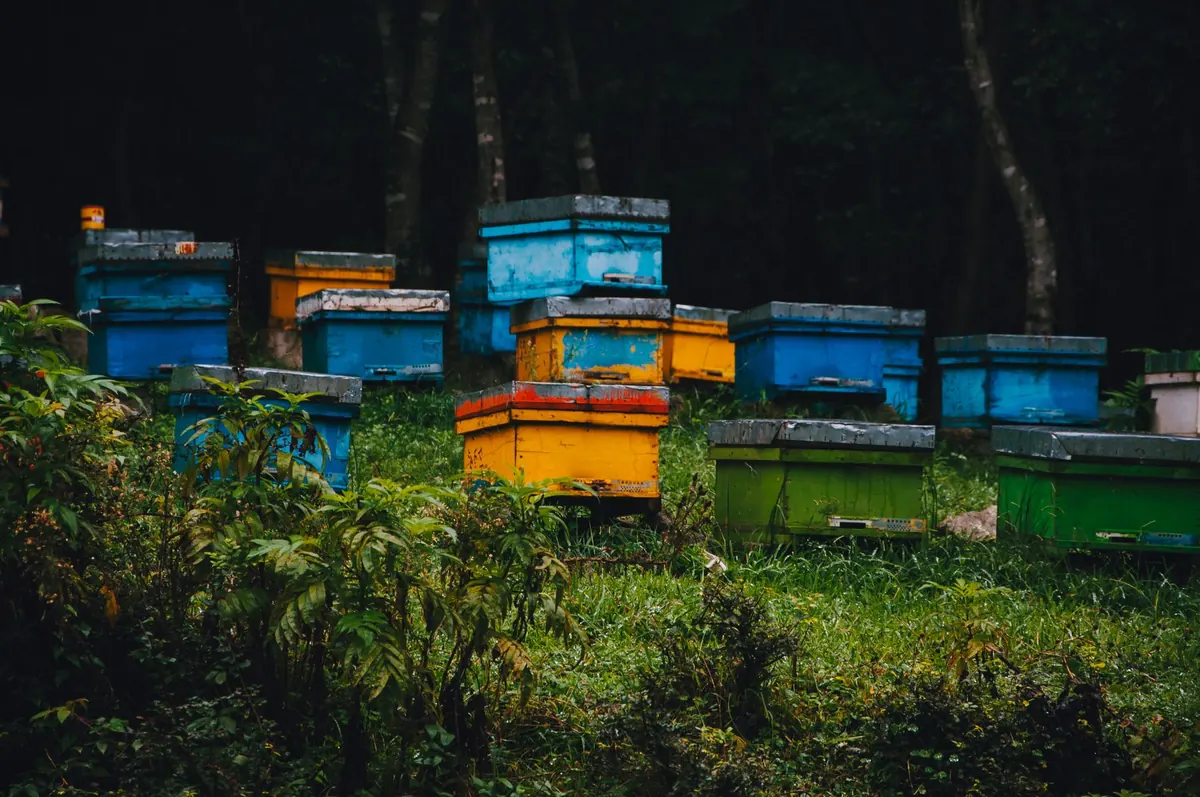
Beekeeping on a city rooftop sounds romantic. In practice it is mostly logistics: stairwells, water containers, wind, and a neighbour who wants to know why there are insects above the bike shed. None of that makes it a bad idea. Towns and cities can be excellent places for a colony, and thousands of UK beekeepers keep hives on roofs, in back gardens and on allotments. Here is what to sort out before you order a hive.
Why urban forage often beats farmland
A city is a patchwork of small green spaces, and that patchwork flowers for longer than a single crop does. Gardens, allotments, parks, cemeteries, railway embankments, canal banks and street trees such as lime and London plane all contribute. The urban heat island helps too: it brings flowering forward in spring and keeps ivy, a vital late source, going into October. Amenity spraying and garden pesticide use still happen, so clean air does not mean clean forage.
The bigger caveat is competition. Urban beekeeping has grown quickly, and some areas now hold more colonies than the nearby flowers can support. Bees will fly several kilometres if they must, but most foraging happens close to the hive, so what counts is what is within roughly a kilometre. Several apiaries within a short walk of your chosen spot is a reason to think again.
Rooftops, balconies and other small spaces
Space is rarely the problem; access and weight are. A stacked hive with full supers is heavy, and you move it by hand. Before you site anything, work out how boxes will go up and come down, and what the roof can carry. On a flat roof that is a conversation with the building owner or managing agent, and possibly a structural engineer.
Other points worth settling:
- Wind: a roof is exposed. Strap every box, weigh down the roof covering, and consider a windbreak.
- Sun: south or south-east, with shade during the hottest part of the afternoon.
- Water: provide a shallow source, such as a tray of pebbles with a lid, kept topped up, or bees will use next door's pond or water butt.
- Flight path: a solid screen about two metres high in front of the entrance lifts bees above head height.
- Access: do not block fire escapes, maintenance routes or shared doorways.
Check the rules before the bees arrive
There is no single law banning hives in towns, but that does not mean you can put one anywhere. Permission comes from several directions, and it is easier to gather in advance than to apologise for later.
- Lease or tenancy: many agreements restrict outbuildings, pets or nuisances, and some name livestock. Read yours.
- Freeholder or managing agent: essential for a roof, shared garden or balcony.
- Allotment rules: sites set their own tenancy conditions, and some councils or committees limit hive numbers or ban them outright.
- Local byelaws: ask your council, especially for public or council-managed land.
- Planning: a couple of hives is not normally a planning matter, but sheds and other structures can be.
- Insurance: check your home policy and consider public liability cover. Beekeeping association membership often includes it.
Register the apiary on BeeBase, the Animal and Plant Health Agency's bee health database. It is free, voluntary in Great Britain, and it is how you hear about disease outbreaks in your area. For anything legal or contractual, take proper advice rather than relying on a forum thread.
Neighbours, swarms and community
Most urban objections come down to swarms, stings and mess. Swarming is the big one, and it is manageable: inspect every seven to nine days through spring and early summer, watch for queen cells, and have a plan ready. An artificial swarm, a bait hive and a spare box cover most situations. Learn to collect a swarm yourself, or save the number of someone who will. Bees also leave droppings that spot washing and cars, so site hives where bees climb away from neighbouring gardens.
Talk to the people around you before the hive arrives. Explain the plan, leave a phone number, and be straight that a swarm can happen. If someone nearby is severely allergic to stings, that is worth knowing. Honeybees are rarely the cause of garden stings; wasps and their nests later in the year are far more often to blame. Perception still matters.
What it actually asks of you
From April to September, expect to open the hive every week to ten days in decent weather: queen cells, space, stores, signs of disease. It takes longer than new beekeepers expect. Winter is quieter but not idle, with varroa treatment, cleaning and reading to get through. Be careful with secondhand kit; combs and frames can carry disease, and American foulbrood spores survive for decades. Buy new frames, or from someone you trust.
Learn first, keep second
Join your local association and take a beginner course over winter, before buying anything. Nothing prepares you for your first inspection like handling someone else's bees under supervision. Ask about mentoring; many associations pair new members with an experienced beekeeper, and some run shared apiaries for people without a garden or roof of their own. It is also the quickest way to find out how many hives are already nearby.
Before you commit
Work through this in order: permission, insurance, site, water, kit, training, mentor. Get a written yes for the site if you can, and be honest about time. If you cannot inspect weekly through swarm season, wait a year or find a partner to share the load. If you are ready, urban beekeeping is genuinely rewarding: a rooftop hive in July, bees working the lime trees, the smell of warm wax. Do the paperwork and the reading first, and the rest follows.
Photo: Nima Mot / Pexels